
How to Reduce Industrial Downtime with the Right Spare Parts Strategy | Sparecon
How to Reduce Industrial Downtime with the Right Spare Parts Strategy
Introduction
Industrial downtime is one of the biggest challenges manufacturers, factories, and production facilities face today. Whether caused by unexpected equipment failure, delayed maintenance, or unavailable replacement parts, downtime can significantly impact productivity, profitability, and customer satisfaction.
Every hour that a production line remains idle can result in lost revenue, delayed deliveries, increased labour costs, and damage to business reputation. While many organisations invest heavily in modern machinery, they often overlook one of the most effective ways to minimise downtime—having the right spare parts strategy.
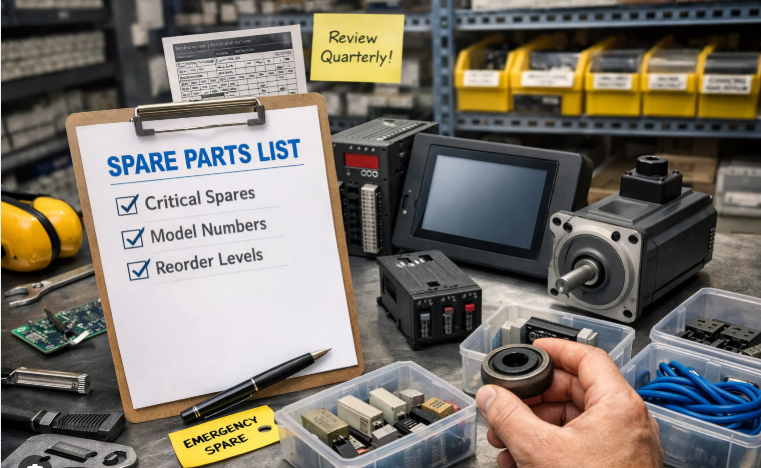
A well-planned spare parts management system ensures that critical components are available when needed, maintenance teams can respond quickly, and equipment returns to operation with minimal delay.
In this guide, we’ll explore why downtime occurs, how spare parts play a vital role in reducing disruptions, and the best practices businesses should follow to build an effective spare parts strategy.
Understanding Industrial Downtime
Industrial downtime refers to any period when equipment or machinery is unable to perform its intended function. Downtime generally falls into two categories:
Planned Downtime
This includes scheduled maintenance, inspections, upgrades, or equipment replacements. Planned downtime allows maintenance teams to service machines before failures occur.
Unplanned Downtime
This is far more expensive. It happens when equipment suddenly breaks down due to worn-out components, mechanical failures, electrical issues, or missing replacement parts.
The primary goal of maintenance teams is to minimise unplanned downtime through preventive maintenance and effective spare parts management.
The Hidden Costs of Downtime
Many businesses underestimate how expensive downtime can be. The visible repair costs are only part of the problem.
Downtime often leads to:
- Lost production output
- Delayed customer deliveries
- Overtime labour costs
- Emergency shipping fees
- Reduced equipment lifespan
- Lower employee productivity
- Contract penalties
- Customer dissatisfaction
For high-volume manufacturing operations, even a single hour of downtime can cost thousands of pounds.
Why Spare Parts Are Critical
Every industrial machine consists of hundreds of moving components that gradually wear over time.
Common replacement items include:
- Bearings
- Filters
- Belts
- Seals
- Gaskets
- Valves
- Air compressor parts
- Sensors
- Electrical components
- Hydraulic fittings
Without these parts readily available, even a minor fault can stop an entire production line.
Having the correct spare parts available allows maintenance engineers to perform immediate repairs instead of waiting days or weeks for suppliers.
Build a Spare Parts Strategy Instead of Reacting
Many companies only order replacement parts after equipment fails.
This reactive approach usually results in:
- Longer downtime
- Higher emergency purchase costs
- Expedited shipping fees
- Production delays
Instead, businesses should adopt a proactive spare parts strategy that focuses on planning ahead.
Identify Critical Equipment
Not every machine has the same importance.
Start by identifying equipment that:
- Runs continuously
- Produces high-value products
- Creates production bottlenecks
- Has expensive repair costs
- Requires long lead-time components
These machines should always have essential spare parts readily available.
Critical equipment deserves priority when building inventory.
Classify Your Spare Parts
Organise spare parts into categories based on importance.
Critical Parts
Parts that immediately stop production if unavailable.
Examples include:
- Main motors
- Compressor valves
- PLC modules
- Drive belts
- Control boards
These should always be stocked.
Essential Parts
Frequently replaced during maintenance.
Examples include:
- Filters
- Bearings
- Seals
- O-rings
Maintain moderate stock levels.
Non-Critical Parts
Items with low failure rates or easily sourced replacements.
These can usually be ordered when required.
Monitor Equipment Failure History
Historical maintenance records provide valuable insights.
Analyse:
- Which machines fail most often
- Frequently replaced components
- Average repair times
- Seasonal maintenance patterns
This information helps forecast future spare parts demand.
Predictive planning prevents unexpected shortages.
Maintain the Right Inventory Levels
Holding too few spare parts increases downtime.
Holding too many ties up valuable capital.
The goal is to find the right balance.
Consider:
- Supplier lead times
- Equipment age
- Failure frequency
- Replacement costs
- Storage requirements
Inventory optimisation reduces unnecessary spending while ensuring availability.
Choose High-Quality Spare Parts
Cheap replacement parts often create expensive problems.
Poor-quality components may:
- Wear out quickly
- Reduce machine efficiency
- Cause additional failures
- Increase maintenance frequency
Investing in reliable, high-quality spare parts improves machine performance and extends equipment life.
Quality parts often cost less over the long term.
Standardise Components Where Possible
Using multiple equipment brands often means stocking hundreds of unique spare parts.
Where practical, standardise:
- Bearings
- Filters
- Fasteners
- Motors
- Sensors
- Belts
Standardisation reduces inventory complexity and purchasing costs.
It also simplifies maintenance procedures.
Partner with Reliable Spare Parts Suppliers
Your supplier plays a crucial role in reducing downtime.
Look for suppliers that offer:
- Genuine replacement parts
- Fast delivery
- Technical support
- Large stock availability
- Competitive pricing
- Product expertise
A dependable supplier becomes an extension of your maintenance team.
Reliable supply chains minimise unexpected delays.
Use Preventive Maintenance
Preventive maintenance replaces worn components before they fail.
Scheduled maintenance helps:
- Detect wear early
- Replace ageing parts
- Improve machine reliability
- Extend equipment lifespan
- Reduce emergency repairs
Combining preventive maintenance with proper spare parts inventory dramatically reduces downtime.
Implement Digital Inventory Management
Manual spreadsheets are difficult to maintain.
Modern inventory systems provide:
- Real-time stock tracking
- Automatic reorder alerts
- Barcode scanning
- Usage history
- Supplier management
- Maintenance scheduling
Digital systems reduce human error and improve inventory visibility.
Maintenance teams always know which parts are available.
Train Maintenance Teams
Even the best inventory is ineffective without knowledgeable technicians.
Regular staff training should cover:
- Correct part identification
- Installation procedures
- Equipment inspections
- Inventory systems
- Preventive maintenance schedules
Well-trained maintenance teams complete repairs faster and reduce repeat failures.
Keep Emergency Spare Parts Kits
Certain machines should have dedicated emergency repair kits.
These kits may include:
- Bearings
- Filters
- Seals
- Belts
- Gaskets
- Fuses
- Fasteners
Emergency kits reduce repair preparation time and improve response during unexpected failures.
Review Your Spare Parts Strategy Regularly
Business operations evolve over time.
Review your strategy at least annually.
Evaluate:
- Equipment additions
- Production increases
- Supplier performance
- Inventory turnover
- Maintenance costs
- Failure trends
Continuous improvement ensures your spare parts strategy remains effective.
Benefits of an Effective Spare Parts Strategy
A well-managed spare parts programme delivers measurable advantages.
These include:
Reduced Downtime
Maintenance teams respond immediately without waiting for deliveries.
Increased Productivity
Machines spend more time producing and less time under repair.
Lower Maintenance Costs
Emergency purchases and expedited shipping become less frequent.
Improved Equipment Reliability
High-quality replacement parts extend machinery life.
Better Budget Control
Planned purchasing reduces unexpected expenses.
Increased Customer Satisfaction
Reliable production ensures orders are delivered on time.
Greater Operational Efficiency
Maintenance becomes more organised and predictable.
Common Mistakes to Avoid
Many businesses unintentionally increase downtime by making avoidable mistakes.
Avoid:
- Waiting until equipment fails before ordering parts
- Buying low-quality replacement components
- Overstocking unnecessary inventory
- Ignoring supplier lead times
- Poor inventory tracking
- Skipping preventive maintenance
- Failing to review historical maintenance data
Recognising these issues early helps create a stronger maintenance programme.
Final Thoughts
Reducing industrial downtime is not just about repairing equipment quickly—it begins long before a machine fails. An effective spare parts strategy ensures that the right components are available at the right time, helping maintenance teams respond efficiently while keeping production moving.
By identifying critical equipment, maintaining optimal inventory levels, investing in quality replacement parts, implementing preventive maintenance, and working with trusted suppliers, businesses can significantly reduce costly interruptions and improve overall operational performance.
At Sparecon, we understand how essential reliable spare parts are to your operation. We offer a comprehensive range of high-quality industrial replacement parts designed to keep your machinery running efficiently and minimise costly downtime.
Investing in the right spare parts strategy today can save your business thousands in repair costs, increase productivity, and provide long-term peace of mind.


Add comment